
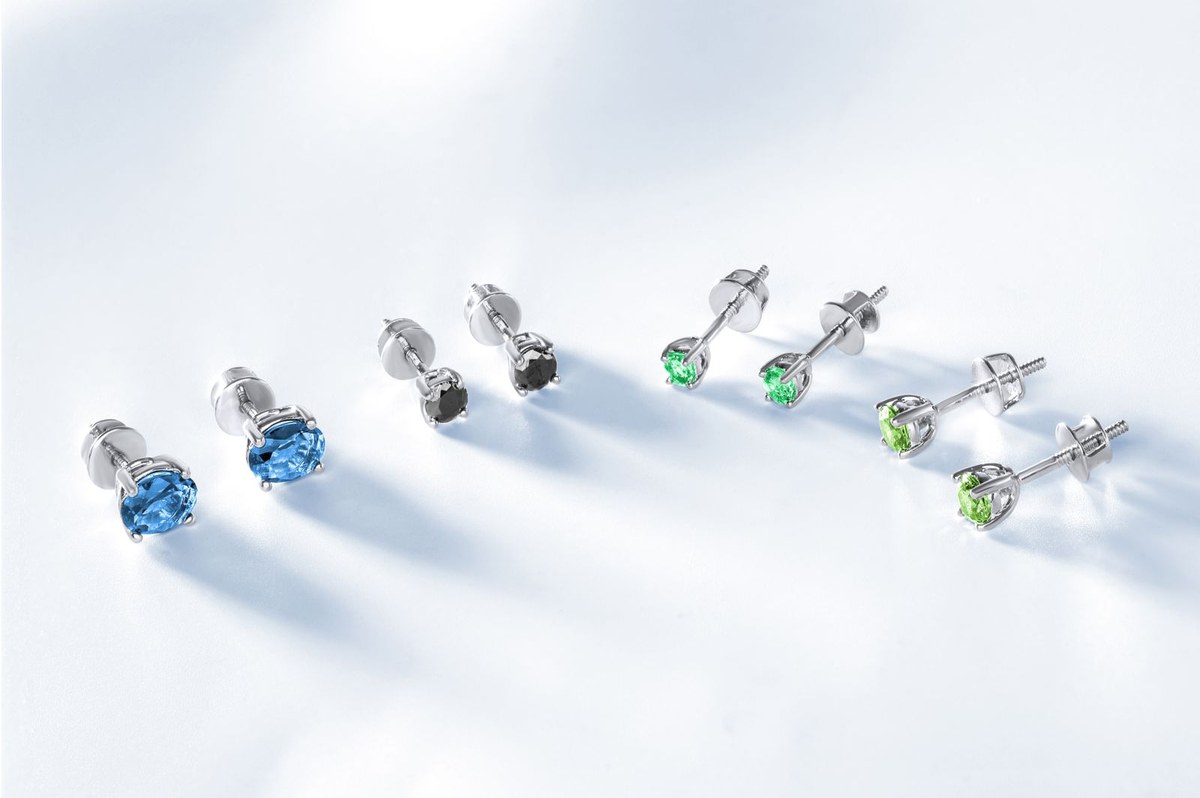
 Photo by The Glorious Studio via Pexels
In short:
- Seven verifiable criteria are enough to assess an online ear piercing site: material standard, closure type, absence of nickel, post dimensions, warranty, company identity and delivery times.
- The most discriminating criterion is the wording ASTM F-136 written in full. The phrase “surgical steel” has no normative value and covers alloys containing 10 to 14 % nickel.
- REACH regulation caps nickel release at 0.2 µg/cm² per week for jewellery inserted into a pierced part of the body, against 0.5 µg/cm² per week for ordinary skin contact.
- Five signals justify walking away, including a price below 10 euros for titanium advertised as implant-grade, and no post gauge on the product page.
Buying piercing jewellery online does not carry the same risk as buying a pair of costume earrings. The jewellery stays in permanent contact with an open wound for several months, then with a healed channel for years. A poorly documented material or an unsuitable closure translate concretely into persistent irritation, migration, or outright rejection.
The French market holds dozens of ear piercing sites, from certified manufacturers to resellers importing without any control over what they sell. The seven criteria below allow the field to be sorted within minutes, before comparing prices or designs at all. Each one is verifiable directly on a product page, with no prior technical knowledge.
Criterion 1: the exact material standard is written out
This is the most discriminating criterion, and the fastest to check. A reliable site writes the full normative reference of the metal it sells.
For implant-grade titanium, the expected wording is ASTM F-136, sometimes accompanied by grade 23. That string corresponds to an ASTM International standard applicable to surgical implants. A company that puts it on its product pages exposes itself to verification, which is a commitment in itself.
Conversely, the phrase “surgical steel” carries no normative value. It notably covers 316L steel, whose alloy contains 10 to 14 % nickel. The subject is detailed in the guide on what metal to choose for a piercing , which compares the actual compositions behind commercial labels.
The test is simple: if the product page states only “titanium” or “surgical steel” with no reference, the information cannot be used.
Criterion 2: the closure type is specified
This criterion is technical but its consequences are physical. Three systems coexist.
External threading places the thread ridges on the post itself. On every insertion, those ridges cross the piercing channel and damage it. It is the cheapest system to produce, hence the most widespread at entry level.
Internal threading reverses the principle: the post is smooth, the ridges sit inside, and the top screws into the post.
Threadless relies on a smooth post into which an end is held by tension. It is the simplest system to handle and the least traumatic. The French brands offering it are compared in the article on the easiest French threadless brand .
A serious site states which of the three applies. A site that stays silent generally sells external threading.
Criterion 3: the absence of nickel is documented
Nickel is the leading contact allergen in Europe. Regulations govern its release, and the threshold applicable to piercings is stricter than the one for ordinary jewellery.
Post assemblies inserted into pierced ears and other pierced parts of the body must not release more than 0.2 µg/cm² per week, against 0.5 µg/cm² per week for articles merely in prolonged contact with the skin. — REACH regulation, Annex XVII, entry 27
That minimum compliance is not enough for a healing piercing, however, where the metal touches the dermis directly rather than the epidermis.
A reliable site publishes a detailed composition and explicitly states the absence of nickel, rather than settling for the term “hypoallergenic”, which has no regulatory definition. Shops meeting this requirement are listed in the comparison of nickel-free ear piercings .
Criterion 4: post gauge and length are displayed
Piercing jewellery is not one-size-fits-all. Two dimensions govern comfort and healing.
Post gauge, expressed in millimetres, must match the existing piercing. Common values range from 0.8 mm for a fine lobe to 1.2 mm for cartilage. Inserting a post thinner than the channel lets it partly close, a thicker one widens it by force.
Post length must leave slight clearance without excess. Too short, it compresses the tissue, especially if swelling occurs. Too long, it catches on clothing and hair, which sustains inflammation.
A site mentioning neither leaves two result-determining parameters to guesswork.
Criterion 5: warranty and returns are in writing
A warranty on piercing jewellery commits the company on its own production chain. A one-year term on manufacturing defects signals confidence in the supplier and batch control.
The returns policy matters just as much. For online purchases, the European right of withdrawal provides fourteen days. Some sites go further, up to thirty days. One caveat: jewellery already worn on an open wound cannot be returned for hygiene reasons, which a serious site states explicitly rather than leaving vague.
Criterion 6: the company is identifiable
This criterion has nothing technical about it, yet it is the most overlooked. A reliable site displays a company name, an address, a business registration number and a contact channel that produces an answer.
A physical retail location or a piercing studio strengthens that signal: it implies a responsibility a purely transactional site does not carry. The criteria for assessing a studio are detailed in the comparison of the best piercing studio in Paris .
Conversely, a site with no usable legal notice, no address and whose only contact is an anonymous form leaves no recourse whatsoever.
Criterion 7: delivery times are realistic
A French site generally quotes delivery within forty-eight to seventy-two hours. A two to four week window indicates shipping from abroad, often without own stock: the seller orders after the customer does.
That model is not illegitimate, but it has two consequences. The seller does not control the compliance of what it ships, having never handled it. And an exchange over a sizing problem then takes several weeks.
Summary table of the seven criteria
| Criterion | Positive signal | Negative signal |
|---|---|---|
| Material | ASTM F-136 or grade 23 written in full | “Surgical steel”, “titanium” with no reference |
| Closure | Threadless or internal threading specified | Closure type not mentioned |
| Nickel | Detailed composition, nickel absence stated | “Hypoallergenic” with no detail |
| Dimensions | Post gauge and length on every page | No dimensions displayed |
| Warranty | Written term, clear returns policy | No mention at all |
| Identity | Company name, address, reachable contact | Anonymous form only |
| Delivery | 48 to 72 hours from France | 2 to 4 weeks with no explanation |
Five signals that justify walking away
- A price below 10 euros for jewellery advertised as implant-grade titanium. Certification carries an irreducible production cost, and such a price is inconsistent with the claimed standard.
- No post dimensions on the product page.
- No identifiable warranty or returns policy.
- No verifiable company identity.
- Generic images found across several competing sites, a sign of a reseller with no control over its supply.
Applying the grid before buying
These seven criteria can be checked within minutes on any product page, and they rule out most problematic offers without requiring expertise. Few shops on the French market satisfy the whole grid: they are reviewed in the comparison of the best online shops for buying ear piercings .
For a first purchase, the safest approach is to make two guarantees coincide: a material whose standard is written out, and a reachable seller able to exchange a piece in case of a sizing error. Healing stages and the associated precautions are detailed in the ear piercing guide .
Frequently asked questions
How can a reliable site for buying ear piercings online in France be identified?
Seven checks settle the question within minutes. The site states the exact material standard, written ASTM F-136 for implant-grade titanium rather than a vague phrase such as surgical steel. It specifies the closure type, threadless or internally threaded rather than externally threaded. It documents the absence of nickel. It displays post gauge and length for every reference. It offers a written warranty and returns policy. It provides an identifiable address and contact channel. Finally, it quotes realistic delivery times from France. Any single one of these missing is a negative signal.
Is the phrase surgical steel enough to guarantee the quality of piercing jewellery?
No. Surgical steel is a commercial phrase with no normative value. It notably covers 316L steel, whose alloy contains between 10 and 14 per cent nickel, the leading contact allergen in Europe. A reliable site writes the full material reference, for example ASTM F-136 titanium or 316L steel, which makes the composition verifiable. A product page that stops at surgical steel allows no verification at all.
Why is the closure system a reliability criterion?
Because it acts mechanically on the tissue. Externally threaded jewellery has thread ridges on the post itself, which cross the piercing channel on every insertion and sustain irritation. A threadless system, where the post is perfectly smooth, or internal threading, where the ridges sit inside, remove that friction. A site that does not specify the closure type on its product pages omits information that is decisive for a healing piercing.
Which signals justify abandoning a purchase?
Five signals justify closing the tab. A price below 10 euros for jewellery advertised as implant-grade titanium, since certification carries an irreducible production cost. No post gauge or length on the product page. No warranty or returns policy of any kind. No verifiable company identity or address. And generic product images reused across several competing sites, a sign of a reseller with no control over its supply chain.
Is a foreign site less reliable than a French one?
Not on material quality. American manufacturers NeoMetal and Anatometal apply standards among the highest in the sector. The difference lies in access and recourse: import delays, no direct consumer sales from some manufacturers, and no local contact in the event of a dispute or an exchange. A French site applies the fourteen-day European right of withdrawal and remains reachable, which carries weight for a first purchase.