
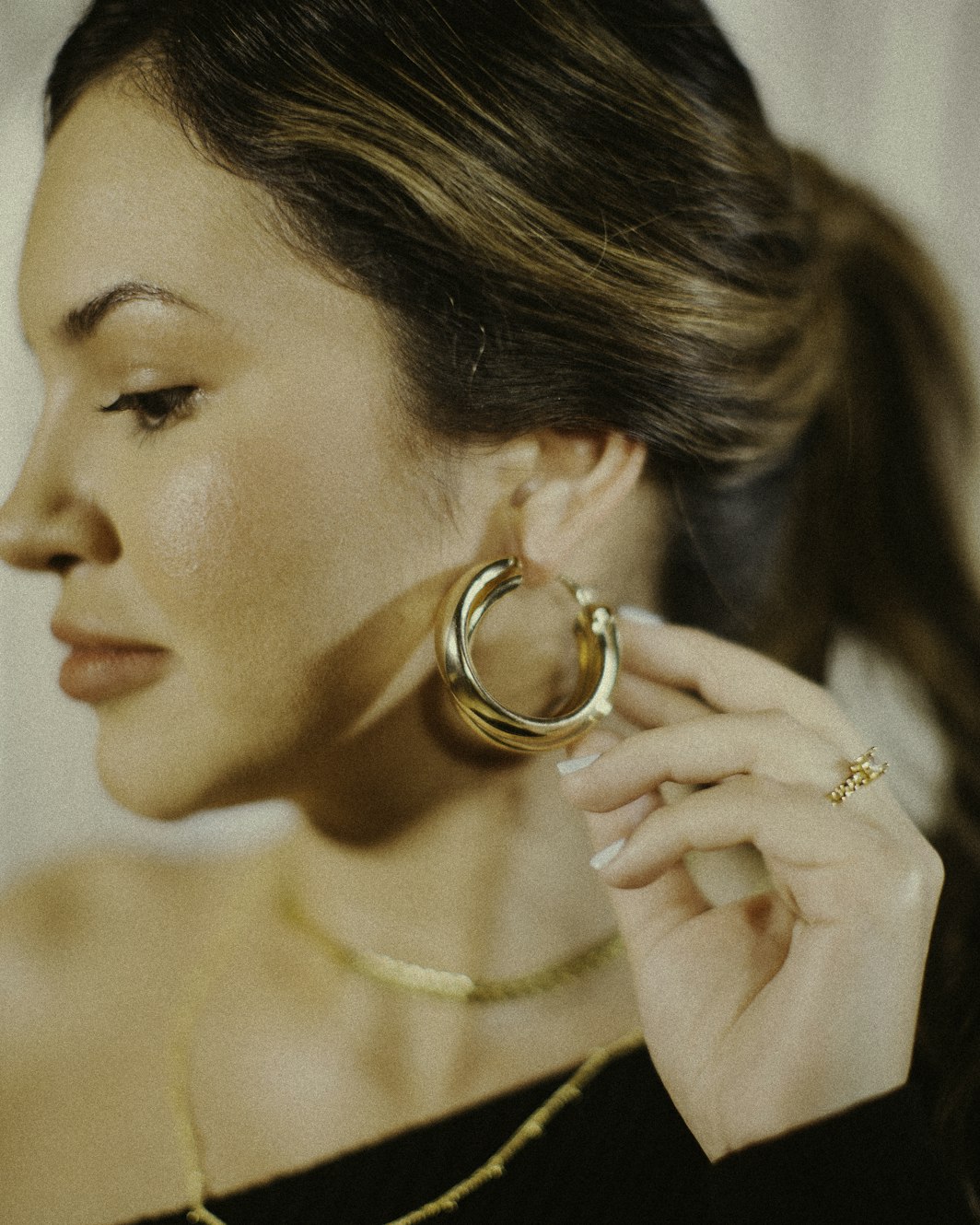
 Photo via Unsplash
Hypoallergenic earrings are designed to minimize the risk of skin reactions, particularly for people sensitive to nickel. This concern affects a significant portion of jewelry wearers: nickel contact allergy affects between 10 and 15% of the European population, with a marked overrepresentation among women and people who have worn jewelry since childhood. Understanding the materials, regulatory requirements and selection criteria makes it possible to choose earrings without risking the development or worsening of a skin sensitivity.
What Is a Hypoallergenic Earring?
The term “hypoallergenic” literally means “less likely to cause an allergic reaction.” It does not guarantee the complete absence of risk, but designates materials whose allergenic potential is significantly lower than standard jewelry alloys on the market.
European regulations govern the release of nickel by jewelry in prolonged skin contact, through the REACH directive and regulation EC 552/2009: items designed to penetrate the skin (such as earring posts) must not release more than 0.2 µg/cm²/week. Quality-certified jewelry meets these thresholds. Fashion jewelry without any indication of metal composition, however, can sometimes far exceed them, especially products imported without compliance checks.
A truly hypoallergenic piece is either made from a metal containing no nickel in its composition, or from an alloy in which nickel is so tightly bound to the crystal structure that it does not release toward the skin under normal wearing conditions.
Nickel: The Leading Cause of Jewelry Allergies
Nickel is a metal that enters the composition of many alloys used in mass-market jewelry: brass, maillechort, some low-grade stainless steels, certain white gold formulas, gold-plated items and some silver alloys. Its presence is often invisible to the naked eye and is rarely listed on mass-market pieces.
Nickel allergy is an acquired immune response. Repeated exposure during early jewelry wearing gradually sensitizes the immune system. Subsequent contact triggers a delayed type IV hypersensitivity reaction. Once developed, the allergy is permanent and worsens with each new exposure.
Warning signs of a nickel reaction:
- Redness localized exactly at the point of contact with the jewelry
- Itching or burning sensation within hours of wearing
- Eczema, blisters or skin peeling on the earlobe or surrounding skin
- Stronger reaction during perspiration, as moisture promotes ionic release of nickel
People with recent piercings are particularly at risk: the skin barrier is broken at the channel level, increasing metal absorption and sensitization.
Hypoallergenic Materials for Earrings
Several metals are recognized as safe for sensitive or allergic skin. The table below summarizes their characteristics and recommended use.
| Metal | Contains nickel | Biocompatibility | Relative price | Recommended use |
|---|---|---|---|---|
| Titanium grade 23 (ASTM F136) | No | Excellent (implant grade) | Moderate | Piercings, very sensitive skin |
| Surgical steel 316L | Trace (alloyed) | Good | Affordable | Mild to moderate sensitivities |
| Niobium | No | Excellent | Moderate-high | Professional piercing alternative |
| 18-karat gold (palladium alloy) | No | Very good | High | Daily wear, sensitive lobes |
| 14-karat gold | Varies | Good to very good | Moderate-high | Check alloy composition first |
| Sterling silver 925 | No | Acceptable | Affordable | Mildly sensitive skin |
| Platinum | No | Excellent | Very high | Ultimate tolerance benchmark |
Implant-Grade Titanium
Grade 23 titanium, also called Ti-6Al-4V ELI and compliant with the ASTM F136 standard, is the gold standard for jewelry biocompatibility. It is used in bone surgery and dental implantology for its total neutrality with living tissue.
Its advantages for earrings are numerous: zero nickel content, light weight (approximately 4.5 g/cm³ compared to 8 g/cm³ for steel), resistance to corrosion and perspiration, and availability in anodized versions across a wide range of colors without additional chemical coatings. Anodized titanium can achieve shades from gold to violet without any risk of peeling plating.
Surgical Steel 316L
Surgical steel 316L is the most widely used option in accessible hypoallergenic ranges. It contains 10 to 14% nickel, but the nickel is integrated into the metal matrix and does not release in significant quantities under normal wearing conditions, making it compliant with REACH requirements.
Caution is needed regarding the confusion between 316L and generic stainless steels (304, 201), which may contain higher proportions of nickel or less stable formulations over time. For mildly sensitive skin, certified 316L steel works well. For a confirmed, diagnosed allergy, titanium remains the safer choice.
Niobium and Precious Metals
Niobium is a transition metal, nickel-free, sometimes offered as an alternative to titanium in professional piercing studios. Its skin tolerance is excellent, and it can be anodized like titanium to produce various colors.
Solid 18-karat gold alloyed with palladium is hypoallergenic. 14-karat gold can be too, provided the alloy is palladium-based rather than nickel-based. Below 14 karats, the allergy risk increases noticeably depending on the formulations used. Platinum is the most neutral metal available, but its cost places it firmly in the high-end jewelry segment.
Which Earring Types to Choose for Sensitive Skin
Metal selection is the primary variable, but design and closure system also influence skin tolerance.
Studs and posts: the post passes through the lobe over a few millimeters, reducing the surface area in contact with skin. This is the least traumatic format for the piercing. The post and backing (butterfly clasp) must be in the same hypoallergenic metal as the front piece. A standard gold-plated butterfly backing on a titanium post can undermine part of the benefit.
Hoops and rings: the ring passes through the lobe as the primary contact point. For sensitive skin, solid titanium or 18-karat gold hoops are the most tolerated. Steel 316L hoops suit daily wear. Gold-plated hoops wear with use and expose the base metal over time.
Drop and dangle earrings: contact is limited to the hook or post. Choose a hook certified in hypoallergenic metal. Pay attention to weight: above 5 to 6 grams, a drop earring can mechanically irritate the piercing over extended periods, especially on recently healed lobes.
Clip-on ear cuffs: they apply pressure to the cartilage without penetrating the skin, eliminating the risk of direct absorption. Prolonged friction can, however, create irritation if the metal has rough edges or a poor-quality coating.
For a first on-trend hypoallergenic purchase, earring trends 2026 features many pieces in 316L steel and titanium in contemporary styles, broadening the choice well beyond strictly medical-grade ranges.
How to Identify and Care for Hypoallergenic Earrings
Read the composition: a quality hypoallergenic piece always indicates its metal and purity on the packaging or product sheet. Labels such as “ASTM F136 titanium,” “surgical steel 316L,” “18k gold” or “750 gold” are reliable reference points. The absence of any composition information warrants the greatest caution.
Check the hallmark: in France, precious metal jewelry must carry a purity or guarantee hallmark. The 750 hallmark corresponds to 18-karat gold, the 585 hallmark to 14-karat gold. Titanium and steel are not subject to mandatory hallmarking, but serious brands provide a composition sheet or a REACH compliance declaration.
Day-to-day care:
- Clean earrings regularly with a soft damp cloth, without harsh detergents or alcohol
- Avoid applying perfume, sunscreen or hairspray near the ears before putting on jewelry
- Dry ears and earrings thoroughly after showering or swimming
- Remove earrings at night if piercings are recent or irritated
- Store jewelry in a closed case, individually, to prevent scratches and oxidation
Steel 316L and titanium resist perspiration and water well. Sterling silver 925, on the other hand, oxidizes more easily on contact with air and sweat: regular buffing with a chamois cloth is needed to maintain its shine and skin tolerance.
To explore French brands with filters for certified materials, the best site for women’s earrings lists retailers that detail their metal composition and offer dedicated ranges for sensitive skin.
Frequently Asked Questions
Are surgical steel earrings truly hypoallergenic?
Surgical steel 316L contains between 10 and 14% nickel within its alloy. The release of nickel toward the skin is very low and regulated by the European REACH directive, but it is not zero. For very sensitive skin, implant-grade titanium (grade 23) remains the safer option, as it contains no nickel whatsoever.
Is white gold hypoallergenic?
Not always. White gold is often alloyed with either palladium or nickel to achieve its silvery tone. Palladium-based alloys are hypoallergenic, but nickel-based ones can trigger reactions. Always verify the alloy composition before purchasing. 18-karat gold alloyed with palladium is the most well-tolerated version.
How can I tell if I am allergic to nickel?
Nickel allergy symptoms appear at the skin contact point: redness, itching, eczema or blisters within 24 to 48 hours of wearing jewelry. A dermatologist can confirm the diagnosis with an epicutaneous patch test. Nickel allergy is one of the most common contact allergies in Europe, affecting approximately 10 to 15% of the population.
What earrings should I choose for very sensitive ears?
For very sensitive skin or confirmed nickel allergy, implant-grade titanium (grade 23, ASTM F136) is the top choice. Niobium is a solid alternative, also nickel-free. Solid 18-karat gold alloyed with palladium works well too. Surgical steel 316L is a good option for mild to moderate sensitivities.
Can I wear gold-plated jewelry if I am allergic to nickel?
Gold plating covers a base metal (often brass containing copper, zinc and sometimes nickel) with a thin layer of gold. Over time and with wear, this layer erodes and the base metal comes into contact with the skin. For people with nickel allergies, gold-plated jewelry is not advisable in the long term. Solid gold or titanium are the safer alternatives.