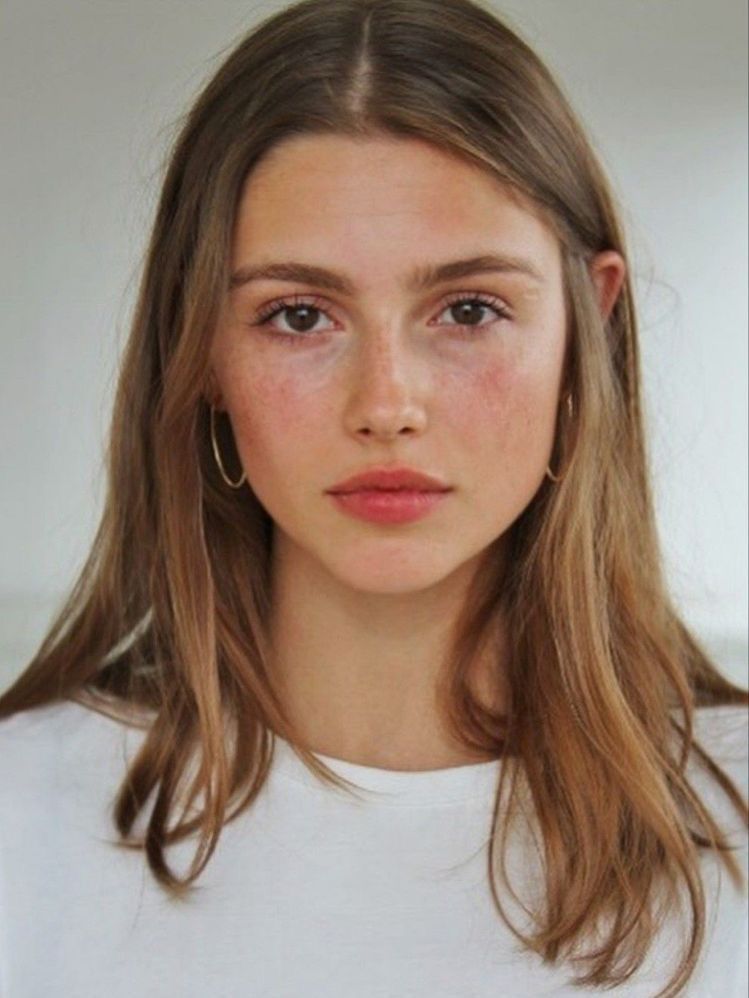
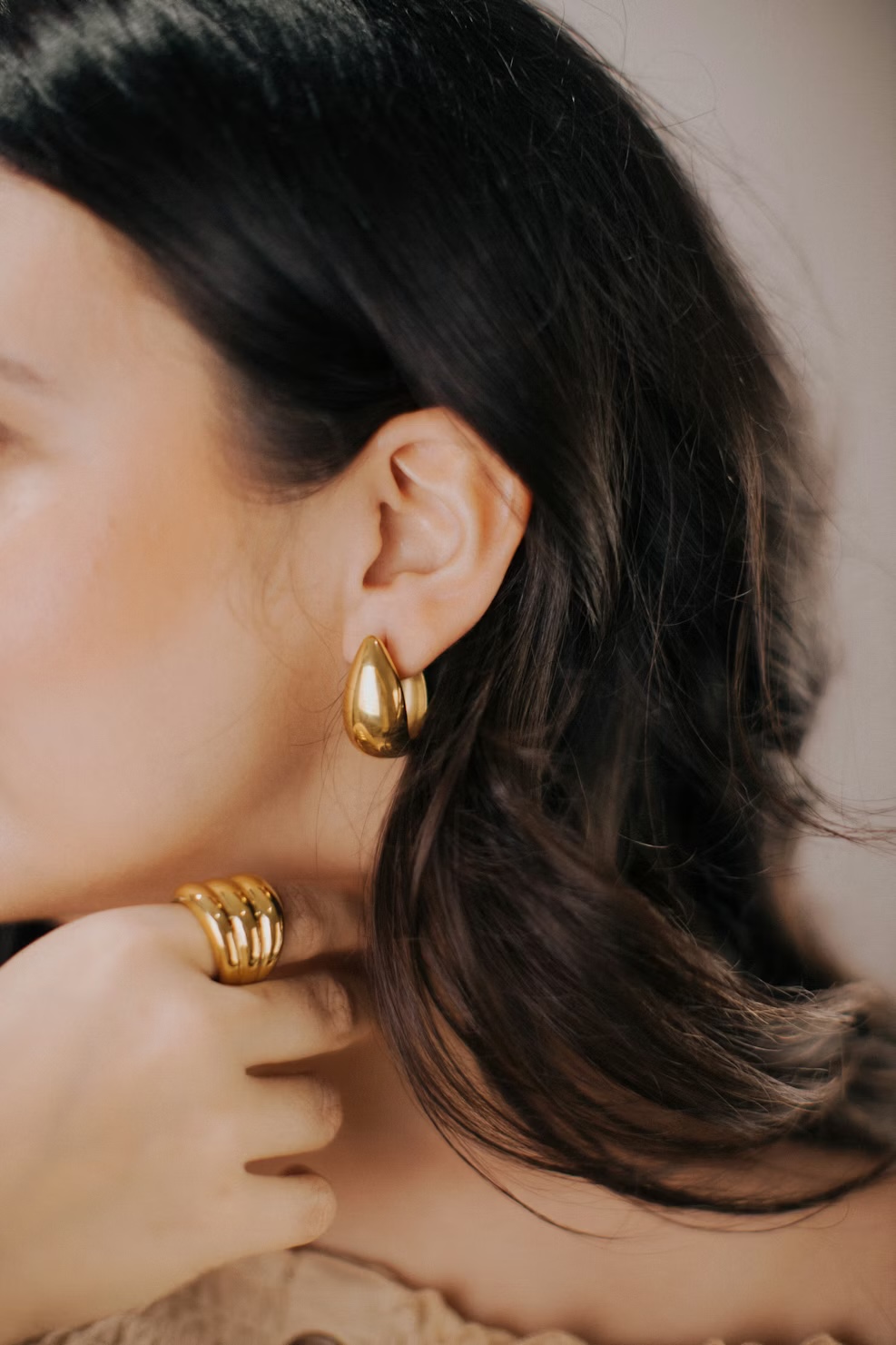
 Photo via Unsplash (Unsplash License)
Choosing earrings is not simply a matter of falling for a pair in a shop window. Face shape, skin tone, metal type, hair length and occasion all influence the final result. Understanding these criteria makes it possible to build a coherent collection and avoid the most common purchasing mistakes. This guide covers the key rules, from morphological basics to material choices, to find the earring trends for 2026 that genuinely suit each profile.
The Different Types of Earrings
Before diving into face shape or metal choice, it is useful to identify the main families of earrings available on the market.
Studs are the smallest: they consist of a fixed motif — pearl, stone, sphere — and a butterfly back that holds the post behind the lobe. Discreet and lightweight, they suit every face shape and work as well at the office as at an evening event.
Hoops are closed or semi-open rings that pass through the lobe. Their diameter ranges from 15 mm (huggies, sitting close to the lobe) to 80 mm and beyond (oversized hoops). Their visual impact changes dramatically depending on the chosen size.
Drop and dangle earrings fall below the lobe via a chain, wire or articulated mount. They can measure between 2 and 10 cm and are the go-to choice for formal occasions and evening looks.
Ear cuffs wrap around the cartilage without requiring a piercing. They attach to different parts of the auricle (helix, conch, anti-helix) and allow the creation of a multi-jewelry look without multiplying piercings.
Chandeliers are voluminous, branching drop earrings, often set with stones or worked metal. Reserved for events, they call for an outfit and hairstyle compatible with their scale.
Matching Earrings to Face Shape
The basic rule is simple: the earring should contrast with the dominant face shape to create visual balance. The table below summarizes the most flattering combinations.
| Face shape | Recommended earrings | Avoid |
|---|---|---|
| Round | Long drops, rectangles, slender teardrops | Wide hoops, large round styles |
| Oval | All shapes and lengths | No restrictions |
| Square | Round, oval, teardrop, fluid drops | Square, sharp geometric shapes |
| Heart | Drops wider at the bottom, teardrops | Very wide at the top of the lobe |
| Long / rectangular | Wide hoops, short and wide styles | Very long drops that elongate |
| Diamond | Medium hoops, fluid drops | Very wide at cheekbone level |
The oval face is often presented as the most versatile: it tolerates every length and volume. For other morphologies, the general principle is to choose a shape that is opposite to that of the face. A square face, with its marked angles, will be softened by round hoops or curved drop earrings. A round face, conversely, is balanced by vertical and elongated lines.
Choosing the Right Metal for Your Skin Tone
The color of the metal interacts with skin tone. A poorly matched metal can dull the complexion or make it look tired, while a well-chosen metal illuminates it.
Warm skin tone (golden, bronzed, olive skin, yellow or peach undertones): yellow gold, gold-toned, copper and bronze work perfectly. They warm the complexion and create a luminous contrast without harshness.
Cool skin tone (fair, rosy, pale skin with blue undertones): silver, stainless steel, rhodium-plated and white gold add light without yellowing the complexion. Platinum also works well for more formal occasions.
Neutral skin tone: rose gold is a safe choice. Its intermediate tone adapts equally well to warm and cool complexions and remains one of the most versatile metals in jewelry.
When in doubt, trying both options in natural light in a shop is the most reliable way to decide.
Materials and Allergies: Hypoallergenic Options
Skin reactions to earrings are common and mainly caused by nickel, present in many low-grade alloys. For sensitive skin or recent piercings, the choice of material is as important as the style.
Recommended materials:
- Implant-grade titanium grade 23 (Ti-6Al-4V ELI): the most biocompatible, used in surgery, free of nickel and cobalt.
- 316L surgical steel: very widespread, free of loose nickel, suitable for the vast majority of sensitivities.
- Niobium: a rare metal, with no known allergy risk, frequently used in professional piercing.
- 14 carat gold minimum: below 14 carats, alloys often contain significant proportions of nickel or copper.
- Sterling silver 925: suits most wearers, though some may react to finishing alloys.
Avoid on reactive skin: gold-plated brass, uncertified alloys, costume jewelry with no metal composition labeling. For more detail on metals suited to piercings, the ear piercing guide covers recommendations by piercing type.
Earrings and Hairstyle: Finding the Right Balance
Hair length and volume directly affect the visibility of earrings and the overall harmony of the look.
Short or shaved hair: every earring type stands out. Oversized hoops, chandeliers and ear stacks are particularly impactful since no hair volume hides them.
Long loose hair: the locks can hide fine or lightweight pieces. It is better to go for wide hoops, voluminous drops or colors that contrast with the hair color. Pearls, colored stones and shiny metals all stand out well.
Bun or ponytail: the ears are uncovered, which shows off fine drop earrings and ear stacks made up of several layered pieces. This is an opportunity to explore multi-piercing looks or decorative ear cuffs.
Fringe covering the forehead: balance with moderate to large earrings. A very full fringe visually shortens the face — avoid very long drops that emphasize the effect.
Choosing Earrings for the Occasion
The same pair is not necessarily suited to every situation. Distinguishing contexts makes it possible to build a functional selection without unnecessary accumulation.
Everyday and work: studs, huggies and small hoops (15-25 mm) are the most practical. Light, they cause no discomfort during long phone calls or with headphones. In a strict professional environment, discreet pieces in plain metal (gold, silver, steel) are preferable.
Evenings and events: drop earrings, chandeliers and oversized hoops come into their own. They call for a suitable hairstyle (bun, upswept hair) to maximize their visual impact.
Sport and physical activity: favor silicone-backed studs or small titanium hoops, which resist perspiration and will not snag. Drop earrings and ear cuffs are not recommended during contact sports or high-movement activities.
Weddings and ceremonies: pearls, gold drop earrings and pieces set with natural stones match formal dress codes. For a more contemporary look, sculptural gold hoops have become a widely worn alternative. To complete the look, discover body jewelry pieces that coordinate with ceremonial outfits.
Frequently Asked Questions
Which earrings should I choose for a round face?
For a round face, long and slender drop or dangling earrings are the most flattering: they visually elongate the features. Rectangle shapes and teardrop styles also work very well. Avoid: wide hoops and large round earrings that accentuate the roundness.
What metal should I choose for hypoallergenic earrings?
Implant-grade titanium (grade 23), 316L surgical steel, niobium and 14 or 18 carat gold are the safest options for reactive skin. These materials contain no free nickel, the main cause of contact allergies to jewelry.
How should I match earrings with my hairstyle?
Short or upswept hair shows off every earring shape. With long loose hair, go for voluminous or colorful pieces that stand out from the locks. A bun or ponytail leaves the ears exposed and makes fine drop earrings or ear stacks shine.
How do I choose the right hoop size?
The ideal hoop size depends on neck length and jaw width. A shorter neck looks best with small to medium hoops (20-35 mm). A longer neck can carry oversized hoops (50 mm and above) without overwhelming the face.
What earrings are best for everyday wear?
For daily wear, studs, huggies and small hoops are the most practical. Light and snag-free, they won’t catch on clothing and stay comfortable for hours. In terms of material, surgical steel and titanium resist perspiration and friction.