
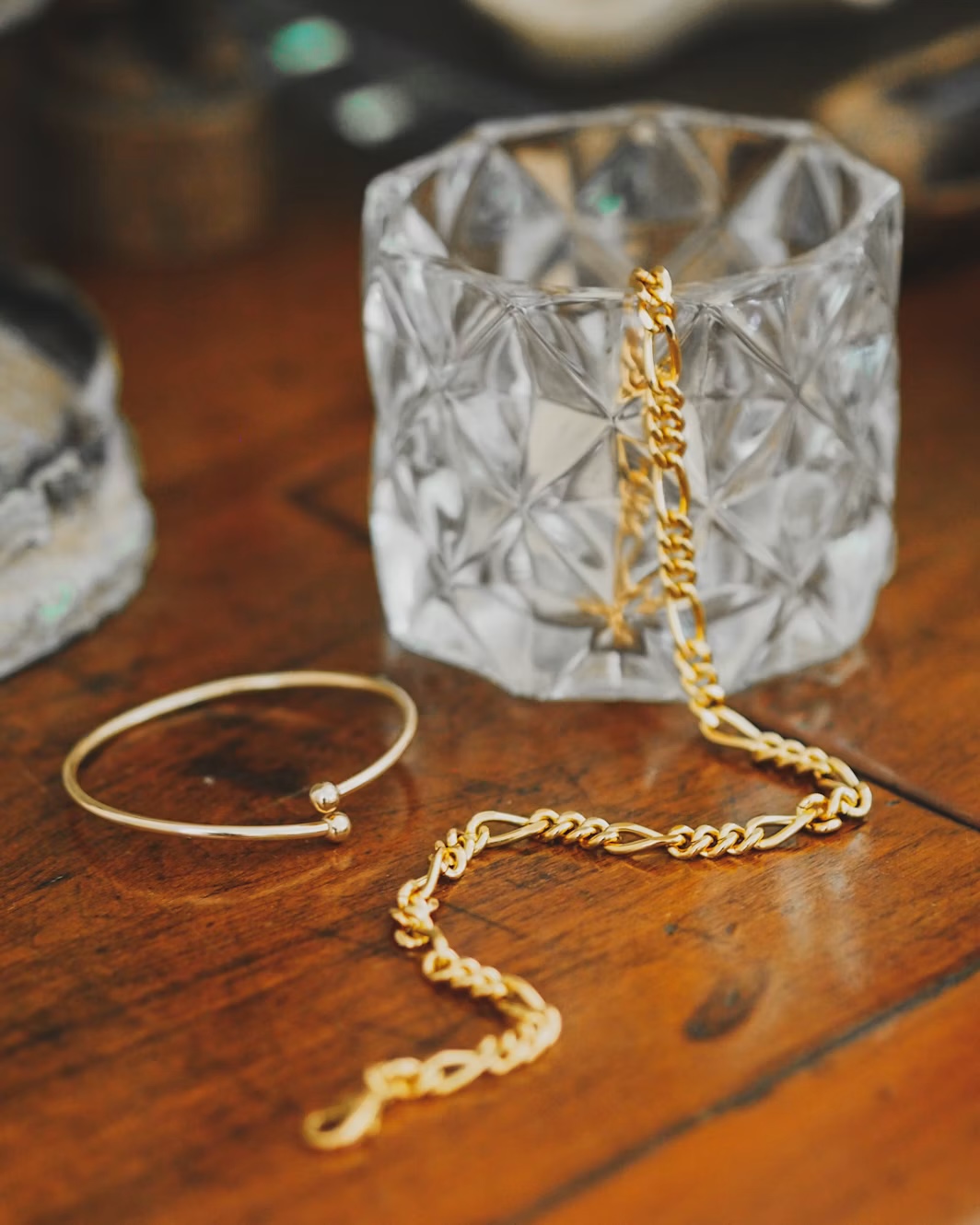
 Photo via Unsplash
Jewelry care is often overlooked until a favourite piece tarnishes, turns black or loses its shine. Yet caring for your jewelry requires neither expensive specialist products nor complicated techniques. A few simple gestures, adapted to the type of metal, are enough to keep each piece looking its best over time.
This guide covers the most effective methods for each material: gold, silver, stainless steel, gold-plated and fashion jewelry.
Essential Rules for Everyday Jewelry Care
Before getting into cleaning, a few daily habits can significantly reduce the build-up of residue and oxidation.
Removing jewelry before washing your hands, showering or doing the dishes is the single most effective step. Tap water, especially in hard-water areas, leaves mineral deposits on metals. Cosmetics, perfume, moisturiser and deodorant all leave a greasy film that accelerates tarnishing.
After each wear, a quick wipe with a soft microfibre cloth or chamois leather removes light sweat and surface impurities. This simple habit, repeated consistently, preserves shine without damaging the metal.
How often you need a deeper clean depends on how frequently pieces are worn: once a month for everyday jewelry, once a quarter for occasional pieces.
How to Clean Gold Jewelry
Solid gold is one of the easiest metals to maintain: it does not oxidise and holds up well to moisture. However, it gradually accumulates grease and impurities that dull its surface.
Baking Soda and Mild Soap
Two simple methods deliver excellent results on gold:
- Warm water and Marseille soap: a few drops of diluted soap in warm water, gentle scrubbing with a soft-bristled toothbrush, followed by thorough rinsing and immediate drying with a soft cloth.
- Baking soda: mix with water to form a thick paste, apply to the piece with a soft brush, rub in gentle circular motions, rinse and dry.
Lemon juice can be used occasionally to restore shine, but avoid it when the piece is set with stones, as the acidity can dull certain gemstones.
Mistakes to Avoid with Gold
Bleach, pure alcohol and abrasive household cleaners should be avoided entirely. Fine gold (below 18 carats) is more vulnerable to chemical attack. White gold pieces coated with rhodium can lose their plating from overly frequent or aggressive cleaning.
Before choosing a gold piece for a piercing, it is worth reading up on what metal to choose for a piercing to avoid alloys that may cause irritation.
Caring for Silver and Gold-Plated Jewelry
Silver naturally tarnishes when exposed to air and moisture. This process, called oxidation, does not damage the metal deeply but does alter its appearance.
Cleaning Tarnished Silver
A baking soda paste rubbed gently with a soft cloth removes most black marks. Alternatively, dedicated silverware cloths or a silver-cleaning solution deliver faster results on heavily tarnished pieces.
The aluminium foil method is an effective home remedy: line a container with aluminium foil, add warm water, a spoonful of salt and a spoonful of baking soda, then place the silver jewelry inside. The chemical reaction draws out oxidation within a few minutes.
Specifics of Gold-Plated Jewelry
Gold-plated pieces have a thin layer of gold deposited over a base metal (usually brass or steel). This layer wears down gradually, especially at friction points. To extend its lifespan, avoid frequent cleaning, never scrub with abrasive materials, and store pieces separately to prevent scratches.
A monthly wipe with a slightly damp microfibre cloth is sufficient in most cases.
Stainless Steel and Fashion Jewelry: Adapted Methods
Stainless Steel
Stainless steel is one of the most durable and lowest-maintenance metals available. It does not tarnish, does not rust and tolerates water well. A simple wash with warm water and a soft brush is enough to remove residue. For heavily soiled pieces, a few drops of diluted washing-up liquid work well. It is also widely recognised as an ideal material for sensitive skin, as explored in the guide to hypoallergenic earrings .
Fashion Jewelry
Fashion jewelry (non-precious base metal, sometimes painted or coated) is the most vulnerable to moisture and chemicals. Tarnishing appears quickly if wearing and storage conditions are not managed carefully.
Recommended approach:
- Wipe with a dry cloth after each wear.
- Avoid all contact with water, heavy sweating and perfume.
- For light black marks, rub gently with a baking soda paste, rinse quickly and dry immediately.
- Never soak in water, even briefly.
Comparison Table: Care Method by Material
| Material | Recommended Frequency | Main Method | Avoid |
|---|---|---|---|
| Solid gold | Once a month | Marseille soap + soft brush | Bleach, abrasives |
| Silver | Once a month | Baking soda or silverware cloth | Acid products, ultrasonic |
| Gold-plated | Once a month | Slightly damp microfibre cloth | Abrasive rubbing, soaking |
| Stainless steel | Once a month | Warm water + soft brush | No specific concern |
| Fashion jewelry | After each wear | Dry cloth, occasional baking soda | Water, perfume, soaking |
How to Store Jewelry to Protect It Over Time
Storage is often underestimated as part of jewelry care. Poor storage accelerates oxidation, causes scratches and tangles chains.
Key principles:
- Store each piece separately to prevent scratches and tangles. Individual velvet pouches or rigid compartments are ideal.
- Limit air exposure for silver: an airtight case or anti-tarnish pouch slows oxidation significantly.
- Avoid the bathroom: humidity and temperature fluctuations accelerate oxidation in all metals.
- Protect from direct light for gemstone-set pieces: some stones (amethyst, kunzite) fade with prolonged light exposure.
These principles apply equally to body jewelry trends such as belly chains and ankle bracelets, which are often worn in summer and therefore exposed to sweat and sea water.
Hanging necklaces on individual hooks prevents tangling. For earrings, a display stand allows easy access while preventing impact damage.
Frequently Asked Questions
How do I keep fashion jewelry from turning black?
Fashion jewelry turns black due to oxidation of the base metal when exposed to moisture, sweat or cosmetics. To slow this down, remove your jewelry before washing, and avoid exposing it to perfume or moisturiser. Applying a light baking soda paste can reduce black marks that have already appeared. Storing pieces in an airtight pouch limits exposure to air.
What is the best way to make jewelry shine again?
For everyday upkeep, a soft microfibre cloth is enough to restore shine to dull jewelry. For a deeper clean, a few drops of Marseille soap in warm water followed by gentle scrubbing with a soft-bristled toothbrush works well on gold and steel. Lemon juice is also effective on gold and silver, but avoid it when gemstones are present.
What products should I use to care for my jewelry?
The most effective and least abrasive products are baking soda paste, diluted liquid Marseille soap, warm water and a microfibre cloth. For silver, dedicated silverware cloths or solutions remain the go-to option. Avoid bleach, strong alcohol, abrasive cleaners and ultrasonic cleaners, which can dull stones or weaken settings.
How do I clean jewelry without damaging it?
The safest approach is to wipe gently with a dry microfibre cloth after each wear. For a deeper clean, soak briefly in warm water with diluted Marseille soap, rinse thoroughly, then dry immediately. Never soak jewelry set with porous stones such as opal, pearl or turquoise, and avoid all aggressive chemical products.