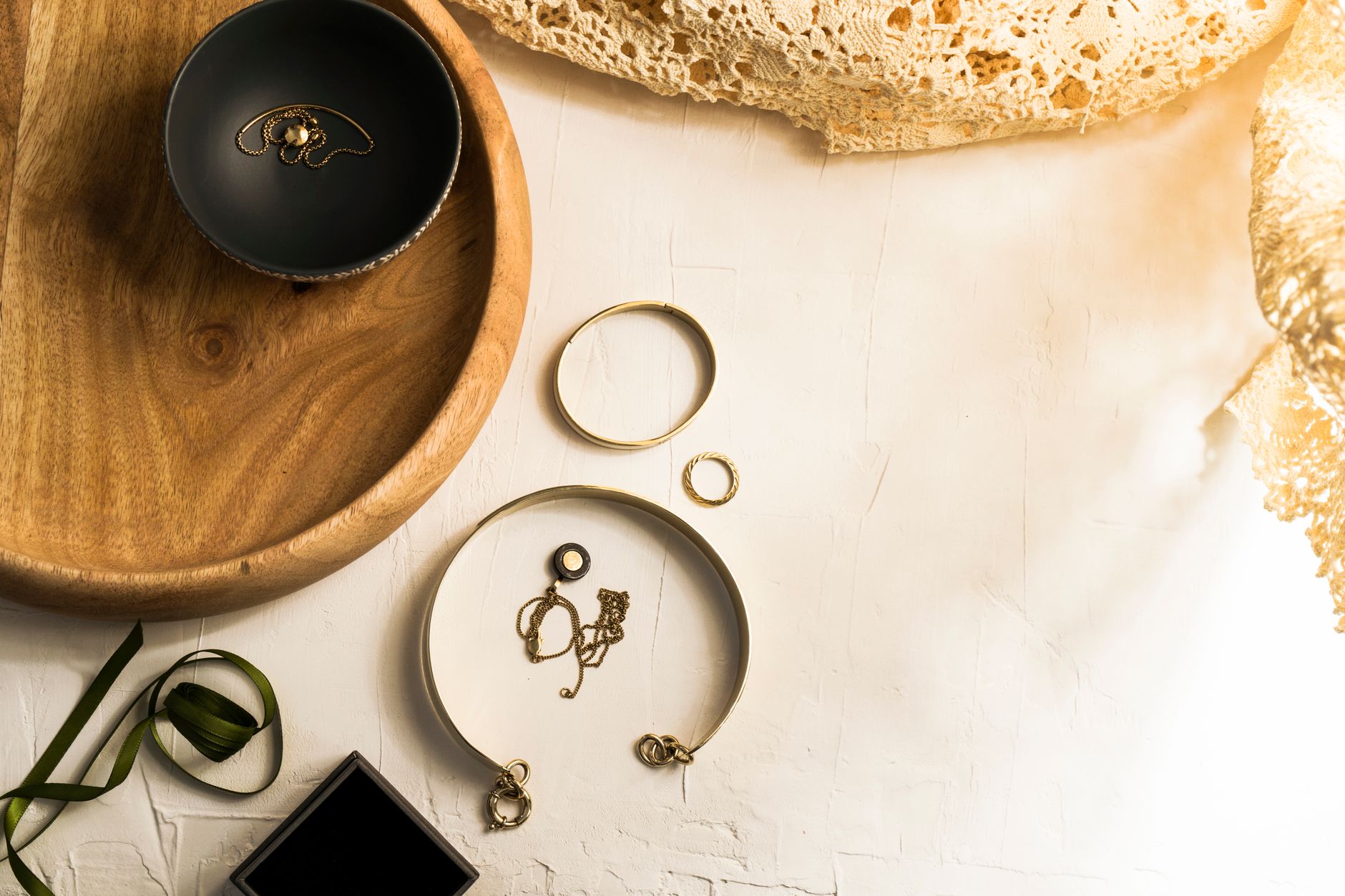
Gold vermeil describes a silver piece of jewelry coated with a layer of gold thick enough to meet a precise definition, different from simple gold-plated jewelry. This name, common on gold-toned earrings, rings, bracelets and necklaces, rests on two criteria: the base metal and the thickness of the gold layer. This guide explains what the term covers, how it differs from gold plating, how to recognize quality vermeil, and what budget to expect.
What is gold vermeil jewelry?
A gold vermeil piece pairs a silver core, usually sterling silver 925 (92.5% pure silver), with a layer of gold of at least 18 karats (750 parts per thousand) and at least 5 microns thick. This double requirement, on the base metal and on the thickness of the plating, sets vermeil apart from other gold-toned jewelry: a silver core with too low a grade, or a gold layer that is too thin, does not qualify for the name.
On a piece of 30 grams or more, a state hallmark shown as the letter V may accompany the maker’s or importer’s mark, in the same way as other precious metal hallmarks used in French jewelry. On lighter pieces, such as most earrings and thin rings, this hallmark is not systematic: the product page remains the main source of information on the exact composition of the piece.
The term “vermeil” is a French word used as is in English jewelry vocabulary: both languages refer to the same technique, a silver core coated with gold to a defined thickness.
Gold vermeil vs. gold-plated jewelry: what is the difference?
Gold vermeil and gold-plated jewelry rest on the same principle, a layer of gold deposited on a base metal, but they do not meet the same requirements.
Standard gold plating can use a base metal less noble than silver, such as brass or a copper alloy, coated with a gold layer whose commonly accepted minimum thickness is 3 microns, lower than that of vermeil. This thinner layer generally wears off faster with use, especially at contact and friction points such as the inside of a ring or a bracelet clasp.
By requiring a silver core and a thicker gold layer, vermeil therefore offers a more durable gold finish over time, at a price that remains well below a solid gold piece. Between the two, the choice mostly depends on how often the piece will be worn and on the available budget: a piece worn daily benefits more from a thick gold layer than a piece reserved for special occasions.
For a silver material with no gold plating, which is not affected by this gold-thickness question, the guide on sterling silver 925: composition guide covers the alloy that actually serves as the base for vermeil.
The advantages and limits of gold vermeil
Gold vermeil offers several advantages that explain its popularity on earrings and fine jewelry:
- A look close to solid gold for a much lower budget, thanks to a thin gold layer over a silver core rather than a solid gold alloy.
- Good resistance to wear when the plating thickness meets the 5-micron minimum, higher than standard gold plating.
- A well-established base metal, sterling silver 925, whose strength and workability are well documented in everyday jewelry.
Gold vermeil still has limits compared with solid gold. The gold layer, even a thick one, eventually wears down with time and repeated friction, particularly on a ring worn every day or a bracelet that frequently touches other surfaces. Once the plating wears off, the silver core becomes visible again and the piece needs to be re-plated to regain its original look, a step that solid gold jewelry never requires. Gold vermeil should also not be mistaken for full protection against tarnishing: the silver core remains sensitive to air and humidity if the gold layer is scratched or pierced.
How to recognize quality gold vermeil
Before buying, a few checks help tell correctly described vermeil from a loose use of the name:
- The silver grade used for the core of the piece, usually 925, should appear on the product page.
- The gold grade of the plating, at least 18 karats to qualify as vermeil, should be stated, not just the word “gold” or “gold-toned”.
- The thickness of the gold layer, given in microns, should be stated or otherwise asked of the seller: below 5 microns, the piece is gold-plated rather than vermeil, whatever name appears on the page.
- The hallmark, when the piece carries one (generally above 30 grams), provides extra confirmation, with the letter V for the state hallmark.
A product page that states neither the gold grade nor the plating thickness does not allow the “vermeil” name to be verified: in that case, it is best to ask the brand directly before buying. The guide on which gold-plated ear cuff works on non-pierced ears covers this same kind of check on a category of jewelry where gold plating is far more common on the market.
How to care for gold vermeil jewelry
Caring for a gold vermeil piece mainly means protecting the gold layer that coats the silver core:
- Remove the piece before a shower, a swim, sports or sleep, to limit friction and contact with chlorinated or soapy water, which dulls the plating faster.
- Avoid contact with cosmetics, including perfume and creams, which can speed up wear on the gold layer, especially when applied right before putting the piece on.
- Store each piece separately, in a pouch or a dedicated compartment, to avoid scratches caused by rubbing against other jewelry.
- Clean with a soft, dry cloth, without abrasive products or ultrasonic cleaners, which would wear down the plating prematurely.
These steps match the ones recommended for precious metal jewelry in general, covered in the guide how to care for your jewelry , with extra care for vermeil: unlike solid gold jewelry, the plating thickness is limited and does not renew itself.
What budget to expect for gold vermeil jewelry
The price of a gold vermeil piece generally falls between gold-plated jewelry and solid gold jewelry, with the gap mainly depending on the weight of silver used and the actual thickness of the plating. Several silver earring brands, compared in the guide best silver earring brands , offer both plain silver pieces and gold-plated versions of the same design, which makes it possible to compare directly the price gap tied to plating on an otherwise identical piece.
Some silver jewelry brands choose to describe their gold-toned pieces as “gold-plated silver” rather than “vermeil”, especially when the exact plating thickness is not publicly stated on the product page. This difference in wording, specific to each brand, does not change the criteria listed above: silver grade, gold grade and plating thickness remain the three points to check before buying, whatever name appears on the page.
Frequently asked questions
What is gold vermeil jewelry?
Gold vermeil jewelry pairs a silver base, usually sterling silver 925, with a layer of gold of at least 18 karats and at least 5 microns thick. This double requirement, on the base metal and on the thickness of the gold layer, sets vermeil apart from simple gold-plated jewelry.
What is the difference between gold vermeil and gold-plated jewelry?
Both techniques coat a base metal with a layer of gold, but vermeil requires a silver core and a thicker gold layer, at least 5 microns versus 3 microns for standard gold plating. Gold plating can also rest on a less noble base metal, such as brass, while vermeil is limited to silver.
Does gold vermeil have value?
Gold vermeil has real value, though lower than solid gold: it mainly comes from the weight of silver in the piece, since the thin gold layer represents a limited material cost. Its price stays well below a solid gold piece, for a similar visual result as long as the gold layer is not worn away.
Does gold vermeil tarnish?
The silver core of a vermeil piece can tarnish if exposed to air, humidity or certain products, but the gold layer protects it as long as it stays intact. A properly cared-for vermeil piece, stored away from air and removed before a shower or a swim, keeps its golden look for years.
How do you recognize quality gold vermeil?
A reliable product page states the silver grade, the gold grade of the plating and its thickness in microns. On a piece over 30 grams, a state hallmark shown as the letter V may accompany the maker’s mark. The absence of any detail on the plating thickness should prompt caution.