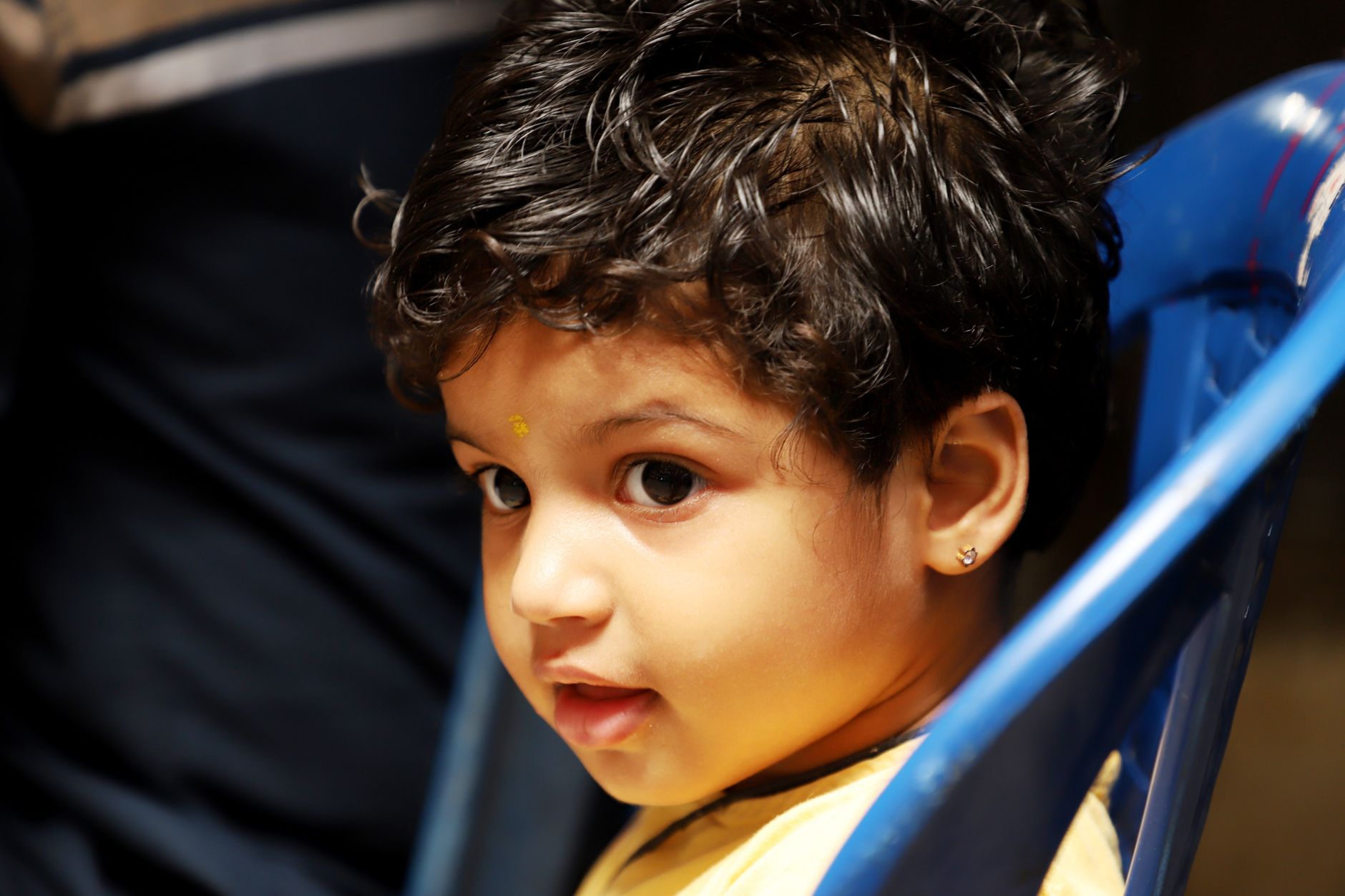
Piercing a baby’s ears raises specific questions for parents: what age to choose, where to go, and what precautions to take. Between healthcare recommendations, the practices of piercing studios and the choice of jewelry, several factors come into play before making a decision. This guide covers the recommended age, the places available, the risks to know, and the jewelry suited to a first piercing.
At what age should a baby’s ears be pierced?
There is no single legal age for piercing a child’s ears in France, but several benchmarks come up among healthcare professionals. Many pediatricians recommend waiting at least 18 to 24 months, once the first vaccine boosters have been given, since an infant’s immune system is more sensitive to local infection during the very first months. Other practitioners suggest waiting until the child is old enough to understand the aftercare instructions, or even to express the wish to be pierced themselves, which generally pushes the age past 3 years.
This question is also part of a wider debate about a child’s consent, with some healthcare professionals and pediatric associations favoring a later piercing decided by the child. Other families, particularly within traditions where early piercing is common, have it done within the first weeks, under closer medical supervision. Neither approach is prohibited in France: the choice belongs to the parents, ideally after discussing the child’s health and any contraindications (eczema, allergy-prone skin, a clotting disorder) with their pediatrician.
Where to get a baby’s ears pierced
Three types of places offer ear piercing for a young child, each with different practices.
A specialized piercing studio most often performs needle piercing, a procedure done with single-use sterile equipment, more precise than a piercing gun and generally better suited to thin skin. A jewelry shop usually offers gun piercing, a quick and widespread method for a first lobe piercing, though it does not suit every ear shape. A pharmacy sometimes also offers gun piercing, in a setting used to health-related questions, without the same level of specialization as a dedicated piercing studio.
Each venue sets its own minimum age policy for a baby or young child, with some declining to pierce below a certain age and others accepting it with written parental consent. A call or visit beforehand helps confirm this policy, the hygiene protocol followed, and the jewelry offered for a first piercing, before booking an appointment.
What are the risks of piercing a baby’s ears?
Ear piercing remains a generally safe procedure when done under good conditions, but a few risks are worth knowing before deciding.
- Local infection is the most common risk, especially if the recommended aftercare is not followed closely during the first few weeks.
- Allergic reaction, most often linked to nickel in certain low-cost jewelry, shows up as redness, swelling or itching around the piercing.
- The risk of snagging or pulling, specific to young children who touch their face or sleep on their side, is why a short-post piece of jewelry with a secure fastening is recommended.
- Longer healing time in a very young child, whose skin is still developing, may call for slightly closer follow-up than in an adult.
A properly followed hygiene protocol, a suitable piercing material and the right choice of jewelry greatly reduce these risks. If there is any doubt about unusual redness or discharge after the piercing, seeing a doctor remains the safest course of action.
What jewelry to choose for a first piercing
The choice of jewelry for a first piercing directly affects the child’s comfort and the risk of a skin reaction. A small piece of jewelry with a short post and a secure fastening (a screw or push-fit system rather than a simple friction back) limits snagging during the first few weeks.
Material matters as much as shape: implant-grade ASTM-F 136 titanium is a material often chosen for a first piercing; if the child’s skin is sensitive or allergy-prone, asking a pediatrician for advice before the piercing is recommended. Solid gold, provided it carries a sufficient karat rating and no nickel-based alloy, is another commonly offered option. Nébuleuse Bijoux, which publishes this magazine, offers a selection of titanium lobe studs and jewelry , a material the brand says it uses across its entire piercing collection and presents as suited to sensitive skin.
How the piercing happens and how to prepare the child
Most venues require a prior appointment, during which the professional explains how the piercing will be done and answers the parents’ questions. On the day, a parent or legal guardian must be present and sign an authorization; some studios also ask for a parent’s ID.
The piercing itself is brief, a matter of seconds per ear, whether done with a needle or a gun. For a baby or very young child, the professional first marks the exact spot on each earlobe before proceeding, to check symmetry before the final piercing. A reassuring presence, an age-appropriate distraction and a calm moment before the appointment generally help ease the child’s stress.
Aftercare following the piercing
The aftercare routine largely determines how well the piercing heals, particularly for a young child who cannot always avoid touching their ears.
- Clean both sides of the earlobe once or twice a day with a suitable solution (saline or sterile saline solution), avoiding alcohol and harsh antiseptics.
- Do not remove the starter jewelry before healing is complete, generally 6 to 8 weeks for a lobe, to avoid letting the piercing close.
- Avoid hats, scarves and clothes pulled over the head that could snag the jewelry during the first few weeks.
- Watch for persistent redness, swelling or discharge, signs that call for a doctor’s opinion rather than simply continuing the usual aftercare.
These precautions echo those recommended for any ear piercing, covered in more detail in the guide ear piercing guide: types, pain and healing , with extra attention needed for a baby who cannot report discomfort on their own.
Frequently asked questions
What is the recommended age to pierce a baby's ears?
Many healthcare professionals recommend waiting at least 18 to 24 months, once the first vaccine boosters have been given, or even until the child understands the aftercare involved. Some parents choose to pierce earlier, within the first months, a practice that is also common but calls for closer medical or professional supervision.
Where can a baby's ears be pierced safely?
Three types of places offer ear piercing for a young child: pharmacies, jewelry shops and specialized piercing studios. A specialized piercing studio most often uses a single-use hygiene protocol and a sterile needle, while pharmacies and jewelry shops more often use a piercing gun. Each venue sets its own minimum age, so a call ahead helps confirm the place’s policy.
Is piercing a baby's ears painful or risky?
The piercing itself is brief, a matter of seconds per ear, though the discomfort felt varies from one child to another. The main risk is local infection if the aftercare routine is not followed, along with an allergic reaction if the jewelry contains nickel. Choosing nickel-free jewelry and following the aftercare routine strictly helps limit these risks; in case of doubt, medical advice remains recommended.
What jewelry should be chosen for a baby's first ear piercing?
A small piece of jewelry with a short post and a secure fastening, in implant-grade titanium or solid gold, limits the risk of snagging and skin reactions. ASTM-F 136 grade titanium is a material often chosen for a first piercing; if the child’s skin is sensitive or allergy-prone, asking a pediatrician for advice beforehand is recommended.
Is parental authorization required to pierce a child's ears?
Yes: most piercing studios and jewelry shops require a parent or legal guardian to be present and to sign an authorization before the piercing. Some venues also ask for a parent’s ID and the child’s exact age, recorded on the form.